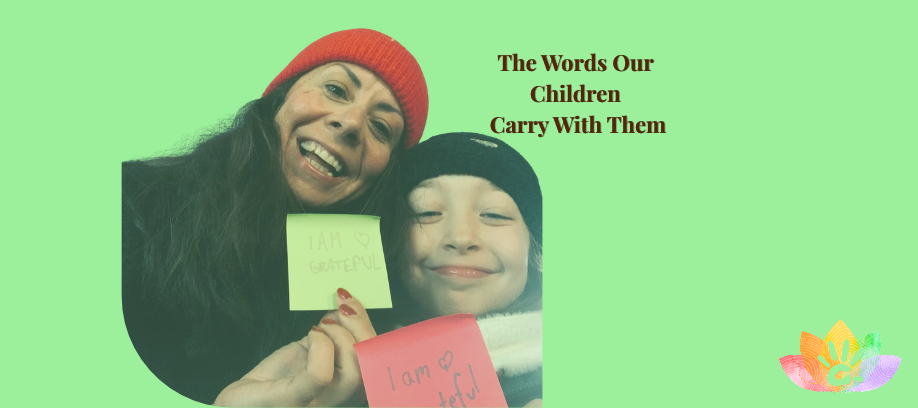
The Words Our Children Carry With Them
Nurturing confidence, self-compassion and resilience, one conversation at a time.
What if some of the words our children carry into adulthood are the words they hear from us today?
Have you ever stopped to notice how you speak to yourself?
Perhaps you’ve made a mistake and immediately thought,”How could I be so stupid?” Or “I am so stupid as usual!”
Or you’ve had a particularly busy day, juggling work, family and everything else, and instead of acknowledging all you’ve done, you focus on what you haven’t managed to finish.
“I’m not good enough.”
“I should have done better.”
“I always get things wrong.”
“Why can’t make things happen, what’s wrong with me?”
Sometimes, these thoughts are so familiar that we barely notice them. Yes, that is the autopilot.
They become part of our everyday inner dialogue. And over time, we may begin to believe them.
But here’s a question for you that is really worth reflecting upon.
If we wouldn’t want our children to speak to themselves this way, why do we so often speak to ourselves like this?
It starts with us
As parents, we naturally want our children to grow up feeling confident, capable, loved and secure in who they are.
We want them to believe in themselves, to embrace opportunities, to learn from their mistakes and to have the resilience to navigate life’s inevitable ups and downs.
Yet sometimes, without even realising it, the way we speak to ourselves can be very different from the way we encourage our children to speak to themselves.
We might tell our child, “It’s okay to make mistakes. You’re learning. But when we make a mistake, we criticise ourselves.
We might remind them, “You don’t have to be perfect.” Yet we place enormous pressure on ourselves to get everything right.
Children don’t only learn from what we tell them. They also learn from what they see, hear and experience in their relationships with us.
This doesn’t mean we have to be perfect parents. Far from it. It means becoming more aware of the messages we’re sending, including the ones we send to ourselves.
And this is where mindfulness can make a difference.
The power of noticing, pausing and choosing
Mindfulness invites us to become more aware of our thoughts, feelings and reactions without immediately judging them.
It helps us notice when our inner critic is taking over, when we’re reacting out of frustration or impatience towards ourselves or when we’re so caught up in the busyness of life that we’re no longer fully present.
And it is in that moment of awareness, that we create an opportunity to choose how we respond.
Notice. Pause. Choose.
Perhaps instead of “I’m such a terrible mum. I lost my patience again,” we might acknowledge:
“Today was difficult. I reacted in a way I didn’t want to. What can I learn, and how can I reconnect with my child?”*
That’s self-compassion.
And when our children see us acknowledging our mistakes, taking responsibility and treating ourselves with kindness, they begin to discover that they, too, can be imperfect, learn and grow.
The words we choose when our children struggle
Now, think about those moments when your child comes home upset because the test didn’t go well or they argued with a friend or couldn’t complete a task in the assigned time.
Their words might sound familiar.
“I can’t do this.”
“I’m rubbish at maths.”
“Nobody likes me.”
“I’ll never be good enough.”
“I’ll never have good friends.”
For most parents, our instinct is often to jump in and make everything feel better.
“Of course you can!”
“Don’t be silly, you’re amazing!”
“There’s nothing to worry about, everything is ok!”
These responses come from love. We want to protect our children from disappointment and difficult emotions.
But sometimes, what they need first isn’t reassurance or a solution. More about this soon….
And sometimes, when our children struggle, make mistakes or behave in ways we find challenging, our own frustration can take over.
We might say things like:
“Why can’t you ever listen?”
“You’re so lazy!”
“How many times do I have to tell you?”
Perhaps these are words we’ve heard ourselves growing up. Perhaps, they slip out when we’re tired, overwhelmed or running out of patience. Maybe, you have put high expectations for yourself and for your life.
But there’s a difference between helping a child recognise that their behaviour needs to change and making them feel that something is wrong with who they are.
We can correct behaviour without criticising the child.
We can be firm, set boundaries and hold our children accountable while still communicating love, respect and understanding.
And when we do react in ways we later regret, we have an opportunity to acknowledge it, apologise and reconnect.
Because we’re human, too. We’re learning and growing alongside our children.
The aim isn’t to become perfect parents. It’s to become more aware of our words, our reactions and the messages our children may be carrying away from those moments.
Our children need to feel heard, understood and supported.
We can begin by being present.
By listening without rushing to fix.
By acknowledging their feelings and the situation.
“That sounds really disappointing.”
“I can see how much this friendship matters.”
“It must have been difficult when that happened.”
“I can see that you are really worried.”
When children feel safe enough to express their emotions, we can help them explore what happened and discover new possibilities.
Instead, we might gently ask:
“What part are you finding difficult?”
“What could you try differently?”
“Who or what could help you?”
And perhaps introduce one small but powerful word.
YET
“I can’t do this… yet.”
“Yet” introduces possibility.
It’s not about pretending everything is easy or that every challenge will disappear.
It’s about helping children recognise that difficulties don’t define who they are and that they can develop skills, learn from experiences and discover new ways forward.
This is how we can begin to nurture a growth mindset, alongside emotional resilience and self-compassion.
The words that become their inner voice
Think about the words you remember from your own childhood.
Perhaps there were words of encouragement that stayed with you.
Someone who believed in you when you struggled to believe in yourself.
Someone who reminded you that you mattered, that you were capable or that you were loved.
And perhaps there were other words that stayed with you too. Words that made you question yourself, doubt your abilities or feel that you weren’t good enough.
Our experiences are complex, and no single conversation determines a child’s future.
But the messages children hear repeatedly, together with how they experience love, support and connection, can contribute to how they come to see themselves.
And this is something we can nurture intentionally.
Through our everyday conversations and the way we respond to their emotions.
Through the way we speak about mistakes, effort and challenges.
And through the words of encouragement we choose to share.
A little practice with meaningful words
One simple way to encourage positive self-talk is through affirmations.
Not as magic words that instantly change how a child feels.
And certainly not as a way of dismissing difficult emotions or pretending that everything is wonderful all the time.
Instead, affirmations can become gentle reminders of qualities, strengths and possibilities that children can begin to recognise within themselves.
Affirmations aren’t about telling our children who they must be. They’re about opening up possibilities for who they are and who they can become.

Some examples:
I am loved and valued.
I am learning and growing every day.
I am kind to myself and others.
I am brave enough to try something new.
I am worthy of kindness, even when things are difficult.
I am a good listener.
I am a good friend.
Of course, the words need to feel meaningful and believable to the child.
And perhaps the greatest impact comes not from repeating the words alone, but from the conversations, experiences and loving relationships that support them.
When a child says,”I’m not brave,”we might want to explore what bravery means to them and gently remind them of a moment when they tried something despite feeling afraid.
When they say, “I’m not good at anything,” we can listen to what’s behind those feelings and help them recognise their strengths, interests and progress.
The affirmation becomes a starting point for connection, not simply a meaningless statement to repeat.
How a little Advent calendar became something more
A few years ago, I decided to create a different kind of Advent calendar for my daughter.
I wanted it to be more than a daily chocolate treat.
So I created 24 little messages, each with a positive affirmation, something meaningful for her to discover every day as we counted down to Christmas.
Her favourite affirmation has always been **”I AM MAGICAL.”** ✨
But some of the other affirmations opened up conversations that went beyond the words themselves.
I remember **”I AM A GOOD LISTENER.”**
Now, let’s face it, listening isn’t always easy for children (or for us adults, for that matter!).
Rather than simply reading the affirmation, we talked about what it actually means to be a good listener. What makes listening difficult sometimes? What could help her listen better?
And then there was **”I AM RESILIENT.”**
A new word to explore together!
What does it mean to be resilient? Does it mean never feeling upset or disappointed? Or is it about learning how to navigate challenges, ask for help, try again and discover that we can grow through difficult experiences?
These weren’t formal lessons. They were little conversations, sparked by a few meaningful words.
And that’s what made this Advent calendar so special to me.
What began as a simple creative idea became a lovely opportunity for connection.
A moment to pause, reflect, explore and sometimes discover something new about ourselves.
A little daily reminder of love, kindness, courage and self-belief.
And I realised that something so simple could become a beautiful way of bringing emotional wellbeing into everyday family life.
Not through another lesson or another thing on our already busy to-do lists. But through small, meaningful fun curious moments together.
A little invitation for mums in Paphos 🎄
This Christmas once again, I’m bringing my personal Advent calendar tradition to a small, creative workshop for mums.
On **Wednesday 25 November at 10:00 am**, we’ll come together in Chloraka, Paphos, to create our own personalised Advent calendars filled with 24 positive affirmations for our children.
It will be a relaxed, festive morning of creativity, reflection and connection, with all craft materials and guidance provided.
You’ll leave with a beautiful handmade Advent calendar, ready to surprise your child on 1 December and bring a little encouragement, love and meaningful connection into each day of Advent.
**Investment: €36 | Only 6 places available**
Discover the Advent Calendar Workshop and reserve your place
And wherever you are in the world, I invite you to reflect on one question:
What words would you love your child to carry with them into adulthood?
Read more about the power of connection with our children here